Beginner guide
How to start seeds indoors
Starting seeds indoors gives you a head start on the season and a wider choice of varieties than garden centers sell. You need a few containers, a seed-starting mix, warmth and, most of all, strong light.
Updated 26 Oct 2026 · Facts checked against the sources at the end.
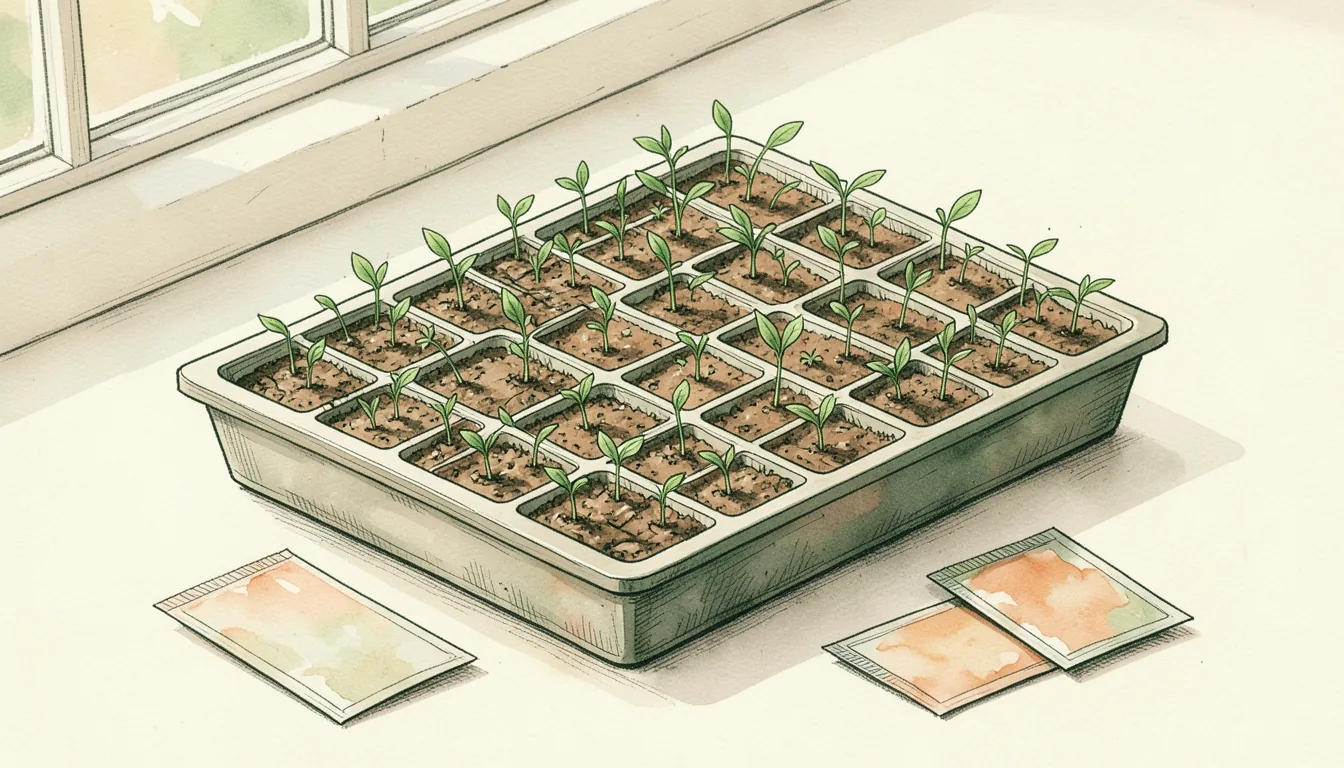
When to start: count back from your last frost
Seed timing works backward from your average last spring frost date. Starting too early gives tall, crowded, root-bound seedlings. Here are timings from university extension tables:
| Plant | Start indoors | Source |
|---|---|---|
| Tomato | About 6 weeks before the frost-free date (CSU); 5 to 6 weeks before transplanting (UMD) | CSU, UMD |
| Pepper | 8 to 10 weeks before transplanting | UMD |
| Onion | 8 to 10 weeks before transplanting | UMD |
| Cucumber, squash | 3 to 5 weeks before transplanting | UMD |
| Lettuce | About 4 weeks before the frost-free date | CSU |
| Petunia, dahlia (from seed) | About 8 weeks before the frost-free date | CSU |
| Marigold, zinnia | About 4 weeks before, or sow directly outdoors | CSU |
Sources differ by a week or two, and your seed packet may give its own advice. Our planting calendar works out the dates for you.
What you need
- Containers with drainage holes: cell trays, small pots or reused containers, cleaned.
- Seed-starting mix, a light soilless mix. Do not use garden soil; it packs down and can carry disease.
- Light: a sunny window is rarely enough. Simple LED or fluorescent shop lights work well.
- A timer for the lights, and labels so you remember what you sowed.
- Optional: a heat mat to speed germination of warm-season crops.
Step by step
- Moisten the mix until it feels like a wrung-out sponge, then fill the containers.
- Sow seeds at the depth on the packet. A rule from Colorado State University Extension: cover seeds no deeper than about four times their diameter. Very fine seed, like lettuce, barely needs covering.
- Keep the mix warm and moist. The University of Maryland Extension suggests a mix temperature of 65 to 75°F for most vegetable seeds.
- As soon as seedlings appear, put them under lights. UMD advises keeping lights 2 to 6 inches above the plants for 14 to 16 hours a day.
- After germination, grow them a little cooler: about 55 to 60°F at night and 65 to 70°F by day (UMD).
- Water from below or gently, so the mix stays moist but not soggy.
Potting up and feeding
When seedlings have their first true leaves and start to crowd, move each one to a bigger pot. Hold seedlings by a leaf, not the stem, which bruises easily. Most seed-starting mixes hold enough nutrients for the first few weeks; after that, a diluted fertilizer helps.
Hardening off
Indoor seedlings are soft. About a week before planting out, Colorado State University Extension advises setting them outdoors for a little longer each day, in a sheltered spot, and keeping them in when temperatures drop below 50°F. Cut back on watering slightly, but do not let them wilt. Then plant out on a calm, cloudy day if you can.
Common seed-starting problems
- Tall, floppy seedlings: not enough light. Lower the lights and keep them on longer.
- Seedlings collapse at soil level: often damping-off, a fungal problem. Use clean containers and fresh mix, and avoid soggy soil.
- Nothing sprouts: the mix may be too cold or too dry, or the seed is old.
Frequently asked questions
When should I start seeds indoors?
Count back from your average last spring frost date. Many crops need 4 to 10 weeks indoors: about 6 weeks for tomatoes and 8 to 10 weeks for peppers and onions before transplanting.
Do seedlings need grow lights?
A window is rarely bright enough and seedlings stretch. University of Maryland Extension suggests lights 2 to 6 inches above the plants for 14 to 16 hours a day.
Can I use garden soil to start seeds?
No. Use a light, soilless seed-starting mix. Garden soil packs down in containers and can carry disease.
What is hardening off?
Getting indoor seedlings used to outdoor sun, wind and cool nights over about a week before planting them out.
Sources
- Colorado State University Extension: Growing Annual Plants from Seed
- University of Maryland Extension: Starting Vegetable Seeds Indoors
- University of Illinois Extension: Starting Seeds Indoors
- University of Illinois Extension: When should I start my seeds?
- NC State Extension Gardener Handbook: Propagation
Written in our own words from the sources above. See our editorial policy. Spotted a mistake? Tell us.