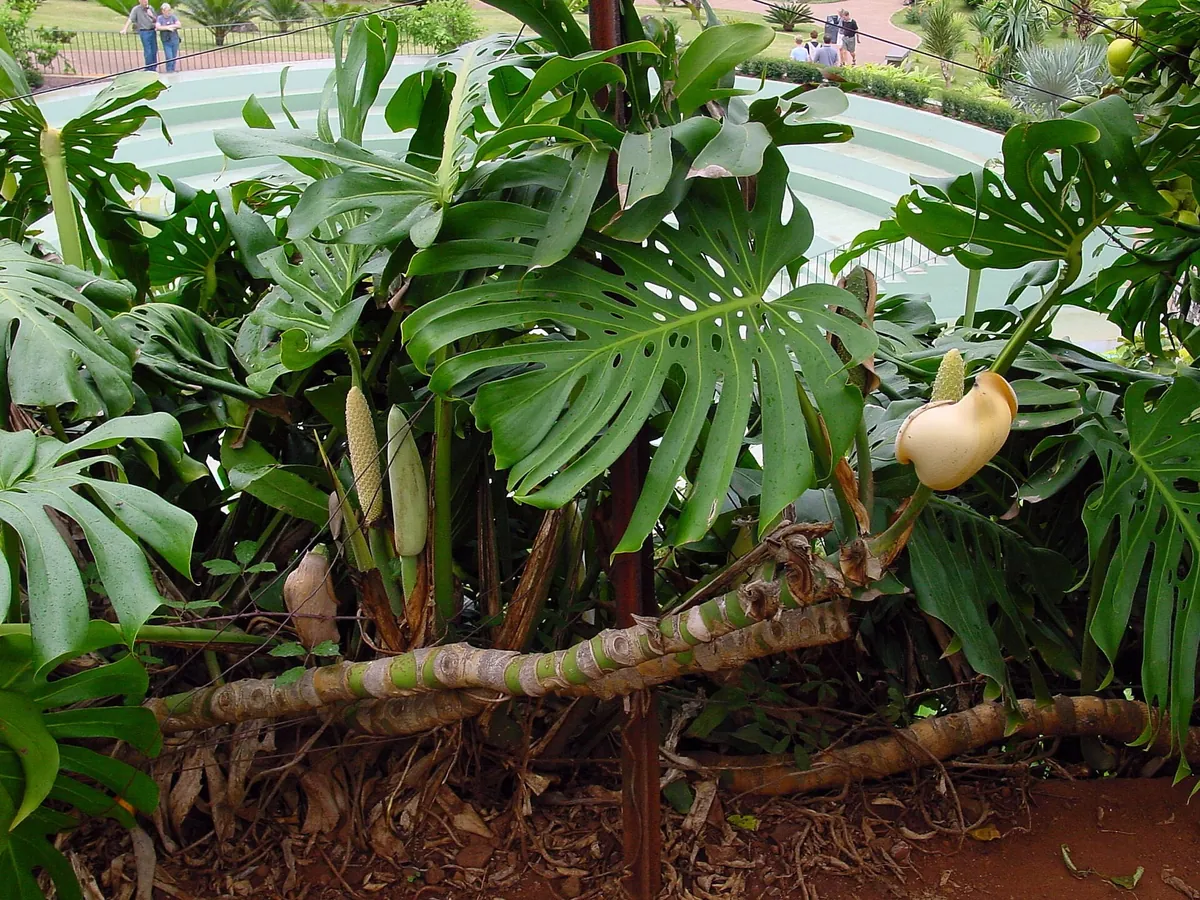
Monstera at a glance
| Botanical name | Monstera deliciosa |
|---|---|
| Family | Araceae |
| Other names | Swiss cheese plant, split-leaf philodendron |
| Plant type | Houseplant; evergreen climbing perennial (houseplant) |
| Size | Often 3 to 8 feet tall indoors with support |
| Light | Part shade (2 to 6 hours of sun) |
| Water | Water when the top couple of inches of soil are dry. |
| Soil | Chunky, well-drained potting mix. |
| USDA hardiness zones | Outdoors only in zones 10 to 12; elsewhere a houseplant. |
| USDA PLANTS symbol | MODE |
When to plant monstera
Repot in spring when roots circle the pot.
How to grow monstera
- Give it bright, indirect light; young leaves without splits are common in dim rooms.
- Add a moss pole or stake so the plant can climb.
- Water when the top of the soil dries.
- Wipe the large leaves to remove dust.
- Guide aerial roots onto the support or the soil.
Water and soil
Water: Water when the top couple of inches of soil are dry.
Soil: Chunky, well-drained potting mix.
Light: Part shade (2 to 6 hours of sun).
Common problems
- No splits in new leaves
- Usually low light or a young plant. More light helps.
- Brown leaf edges
- Often from dry air or uneven watering.
Is monstera safe for cats and dogs?
Toxic
Toxic
The ASPCA lists Cutleaf Philodendron (Monstera deliciosa) as toxic to cats and toxic to dogs. Signs it lists include: oral irritation, intense burning and irritation of mouth, tongue and lips, excessive drooling, vomiting, difficulty swallowing. ASPCA entry.
NC State Extension rates its poison severity for people and animals as low.
If a pet chews a plant and you are worried, call your vet or the ASPCA Animal Poison Control Center (888-426-4435; a fee may apply). For people, call Poison Help at 1-800-222-1222. In an emergency, call 911.
Can you eat monstera?
Treat the plant as not edible. NC State notes only the fully ripe fruit is eaten, and the plant rarely fruits indoors.
Monstera questions
Is monstera toxic to pets?
Yes. The ASPCA lists Monstera deliciosa (as cutleaf philodendron) as toxic to cats and dogs, causing mouth irritation, drooling and vomiting.
Why are my monstera leaves not splitting?
Young plants and plants in low light often make solid leaves. Brighter, indirect light and a support to climb help mature leaves form.
How often should I water a monstera?
Water when the top couple of inches of soil feel dry, usually about once a week in summer and less in winter.
Sources
- NC State Extension Gardener Plant Toolbox: Monstera deliciosa (size, light, soil, zones, poison rating)
- USDA PLANTS Database profile: Monstera deliciosa Liebm. (accepted name)
- ASPCA: Cutleaf Philodendron (pet toxicity)
- ASPCA Animal Poison Control: plants toxic and non-toxic to cats
- ASPCA Animal Poison Control: plants toxic and non-toxic to dogs
Written in our own words from the sources above. See our editorial policy. Spotted a mistake? Tell us.