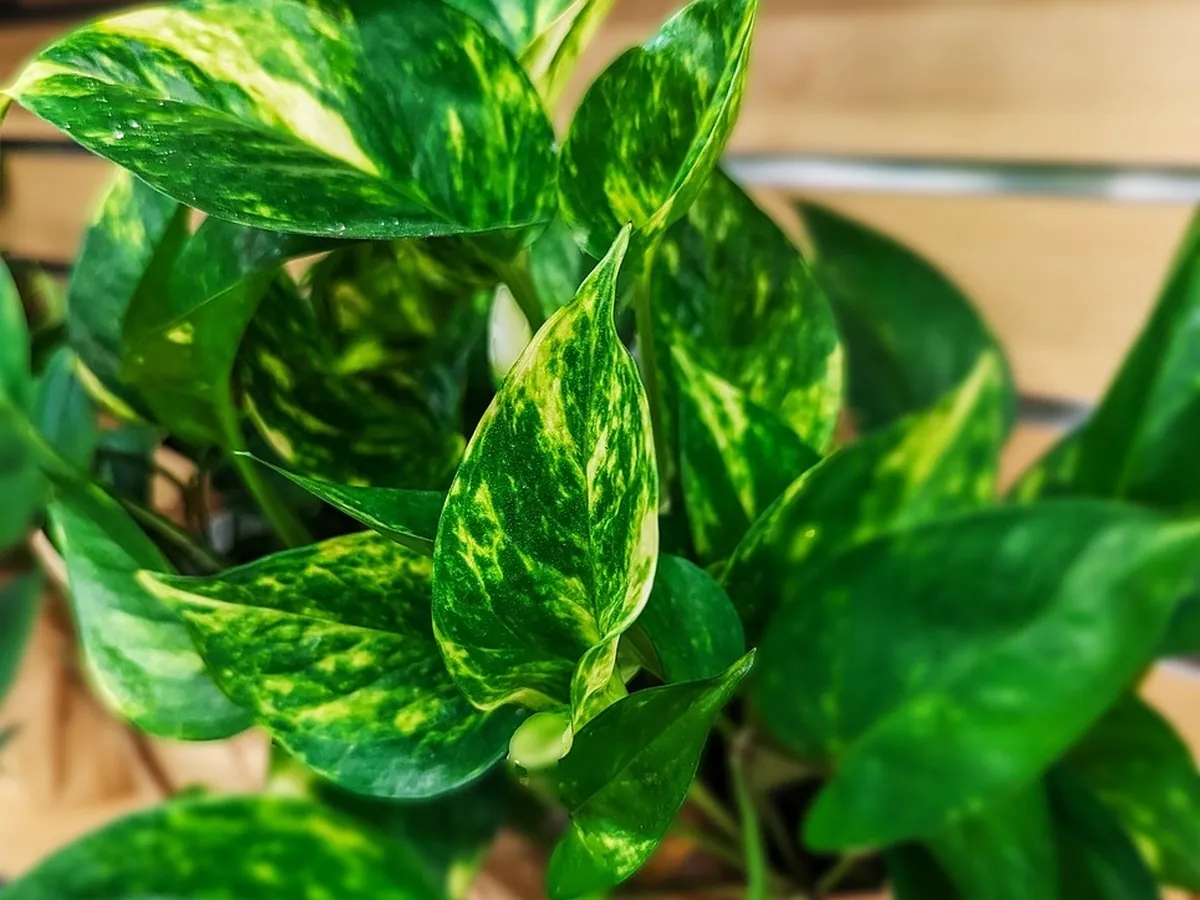
Pothos at a glance
| Botanical name | Epipremnum aureum |
|---|---|
| Family | Araceae |
| Other names | golden pothos, devil's ivy |
| Plant type | Houseplant; evergreen vine (houseplant) |
| Size | Vines trail or climb several feet indoors |
| Light | Part shade (2 to 6 hours of sun); Shade (under 2 hours of direct sun) |
| Water | Water when the top inch or two of soil is dry. Leaves droop a little when the plant is thirsty. |
| Soil | Any well-drained indoor potting mix. |
| USDA hardiness zones | Grown as a houseplant in the US; it cannot take frost. |
| USDA PLANTS symbol | EPAU |
When to plant pothos
Repot or take cuttings in spring and summer.
How to grow pothos
- Place in bright, indirect light; variegated types keep their color best in brighter rooms.
- Water when the top of the soil is dry.
- Trim long vines to keep the plant full.
- Root the cuttings in water or moist potting mix to make new plants.
- Feed lightly in spring and summer.
Water and soil
Water: Water when the top inch or two of soil is dry. Leaves droop a little when the plant is thirsty.
Soil: Any well-drained indoor potting mix.
Light: Part shade (2 to 6 hours of sun); Shade (under 2 hours of direct sun).
Common problems
- Yellow leaves
- Often from overwatering. Let the soil dry a bit more between waterings.
- Long bare vines
- Not enough light. Move closer to a window and trim back.
Is pothos safe for cats and dogs?
Toxic
Toxic
The ASPCA lists Golden Pothos (Epipremnum aureum) as toxic to cats and toxic to dogs. Signs it lists include: oral irritation, intense burning and irritation of mouth, tongue and lips, excessive drooling, vomiting, difficulty swallowing. ASPCA entry.
NC State Extension rates its poison severity for people and animals as medium.
If a pet chews a plant and you are worried, call your vet or the ASPCA Animal Poison Control Center (888-426-4435; a fee may apply). For people, call Poison Help at 1-800-222-1222. In an emergency, call 911.
Can you eat pothos?
Not edible.
Pothos questions
Is pothos toxic to cats and dogs?
Yes. The ASPCA lists golden pothos as toxic to cats and dogs. Chewing the leaves can cause mouth irritation, drooling and vomiting.
How do you propagate pothos?
Cut a piece of vine with a few leaves and at least one node, then root it in water or moist potting mix. Roots usually appear within a few weeks.
Does pothos need sunlight?
It does best in bright, indirect light but tolerates lower light. Avoid strong direct afternoon sun, which can scorch leaves.
Sources
- NC State Extension Gardener Plant Toolbox: Epipremnum aureum (size, light, soil, zones, poison rating)
- USDA PLANTS Database profile: Epipremnum aureum (Lindl. & André) Bunting (accepted name)
- ASPCA: Golden Pothos (pet toxicity)
- ASPCA Animal Poison Control: plants toxic and non-toxic to cats
- ASPCA Animal Poison Control: plants toxic and non-toxic to dogs
Written in our own words from the sources above. See our editorial policy. Spotted a mistake? Tell us.