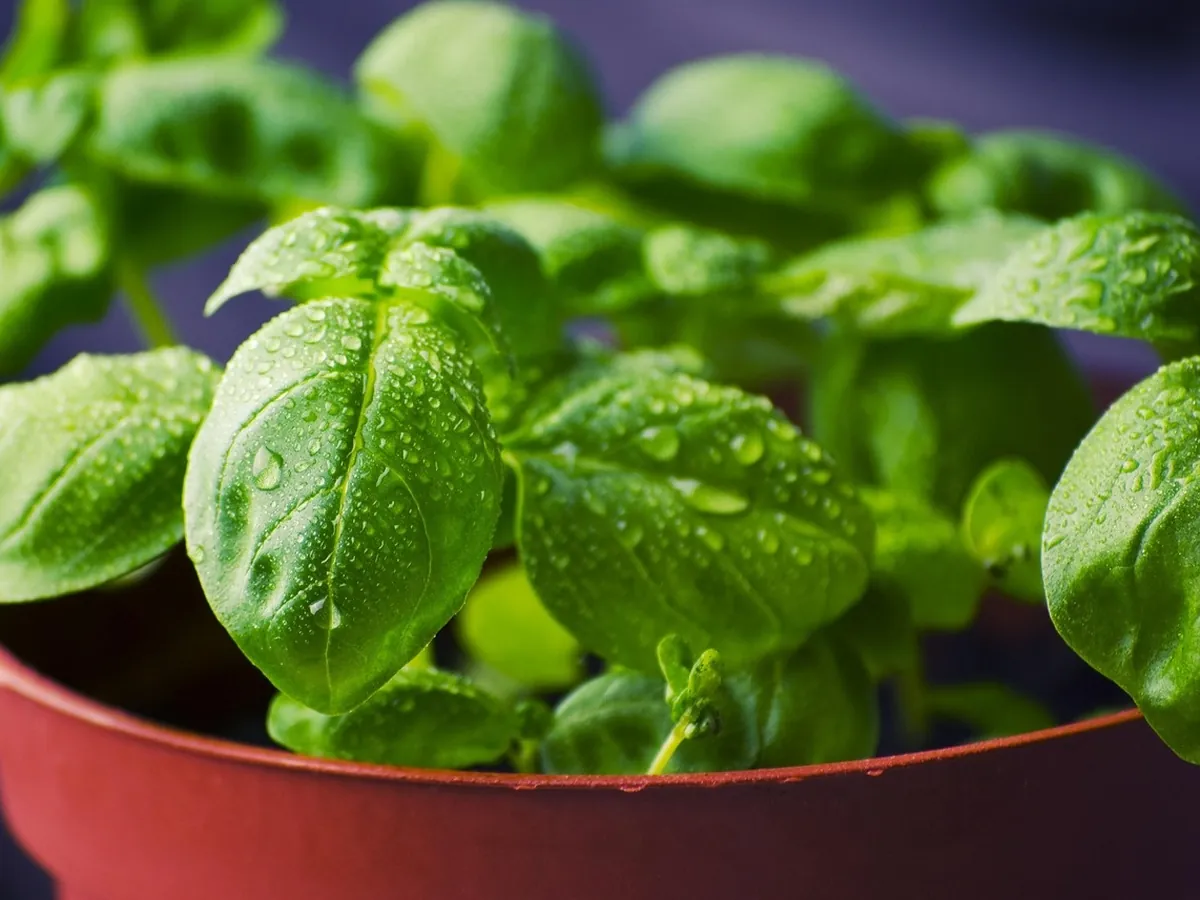
Basil at a glance
| Botanical name | Ocimum basilicum |
|---|---|
| Family | Lamiaceae |
| Other names | sweet basil |
| Plant type | Herb; tender annual herb |
| Size | 4 inches to 3 feet tall, 4 to 14 inches wide |
| Light | Full sun (6 or more hours of direct sun); Part shade (2 to 6 hours of sun) |
| Water | Keep the soil lightly moist. Basil wilts fast in pots on hot days. |
| Soil | Well-drained, fertile soil that stays slightly moist. |
| USDA hardiness zones | Grown as a summer annual everywhere; it is only perennial in frost-free zones 10 and up. |
| USDA PLANTS symbol | OCBA |
When to plant basil
Plant outside after all danger of frost has passed and the soil is warm. Cold nights turn basil leaves black.
Turn these into real dates for your area with the planting calendar.
How to grow basil
- Sow seeds indoors or buy small plants in spring.
- Plant outside in full sun once nights are warm.
- Space plants about a foot apart so air can move between them.
- Pinch off the top pair of leaves when plants have 3 or 4 pairs; this makes them bushy.
- Remove flower spikes as they form to keep leaves coming.
- Harvest from the top down, cutting just above a pair of leaves.
Water and soil
Water: Keep the soil lightly moist. Basil wilts fast in pots on hot days.
Soil: Well-drained, fertile soil that stays slightly moist.
Light: Full sun (6 or more hours of direct sun); Part shade (2 to 6 hours of sun).
Common problems
- Black or brown leaves after a cold night
- Basil is very tender. Cover plants or bring pots indoors when nights drop near 50°F.
- Downy mildew
- Yellowing leaves with gray fuzz underneath. Give plants space and sun, water the soil, and remove sick plants.
- Few leaves, many flowers
- Pinch off flower spikes and harvest often.
Is basil safe for cats and dogs?
Non-toxic
Non-toxic
The ASPCA lists Basil (Ocimum basilicum) as non-toxic to cats and non-toxic to dogs. ASPCA entry.
If a pet chews a plant and you are worried, call your vet or the ASPCA Animal Poison Control Center (888-426-4435; a fee may apply). For people, call Poison Help at 1-800-222-1222. In an emergency, call 911.
Can you eat basil?
Leaves and flowers are edible fresh or cooked.
Basil questions
How do you keep basil growing all summer?
Pinch the tips often, remove flower spikes as soon as they appear and harvest a little every week. Regular cutting keeps the plant leafy.
Is basil safe for cats and dogs?
The ASPCA lists basil as non-toxic to cats and dogs.
Can basil grow indoors?
Yes, in a very sunny window or under grow lights. Indoor basil grows more slowly and needs a bright spot to stay compact.
Sources
- NC State Extension Gardener Plant Toolbox: Ocimum basilicum (size, light, soil, zones, poison rating)
- USDA PLANTS Database profile: Ocimum basilicum L. (accepted name)
- ASPCA: Basil (pet toxicity)
- ASPCA Animal Poison Control: plants toxic and non-toxic to cats
- ASPCA Animal Poison Control: plants toxic and non-toxic to dogs
Written in our own words from the sources above. See our editorial policy. Spotted a mistake? Tell us.