Beginner guide
Organic gardening basics
Organic gardening means growing plants by feeding the soil instead of only the plant, and preventing problems before reaching for any spray. The methods below are simple, low-cost and work in any home garden.
Updated 26 Oct 2026 · Facts checked against the sources at the end.
Start with the soil
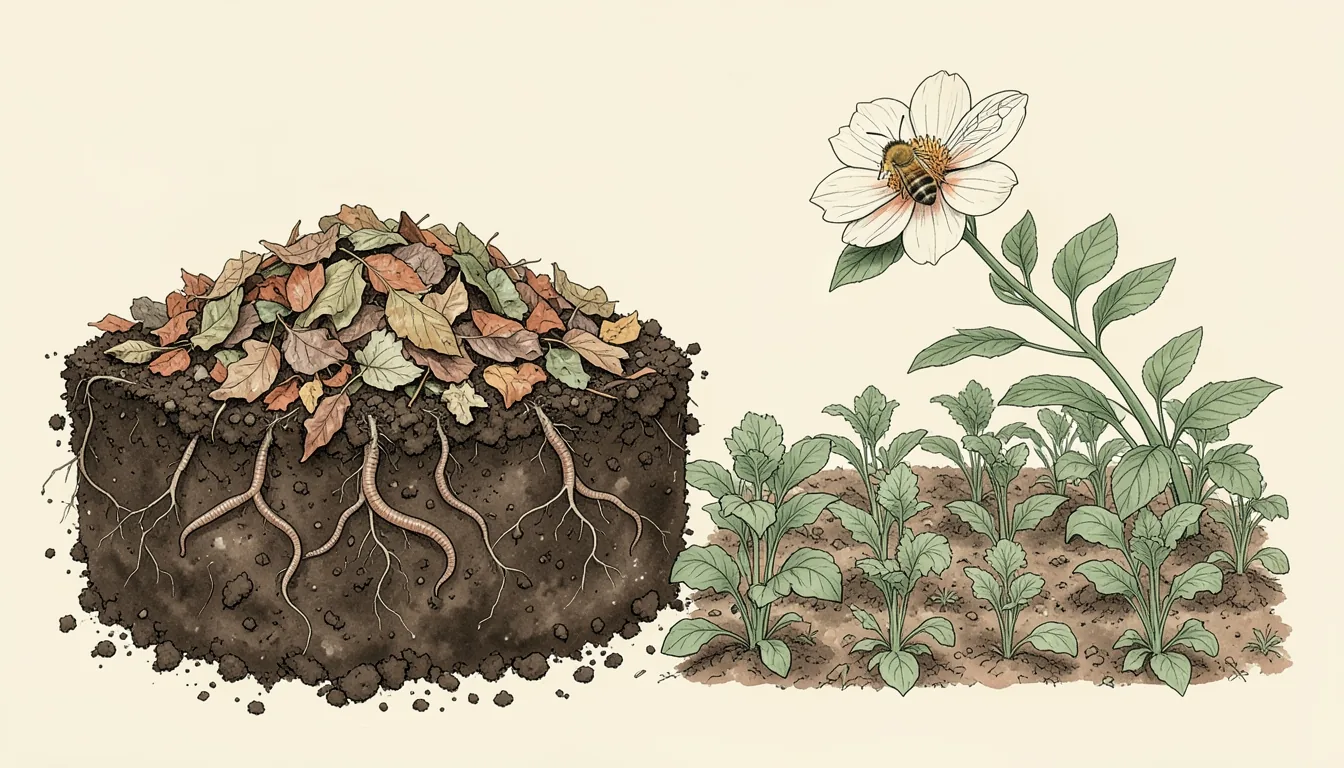
Healthy soil holds water and air and feeds a huge community of soil life. Organic matter is the key ingredient. Oregon State University Extension explains that organic matter improves drainage and air in clay soils and helps sandy soils hold water and nutrients.
- Test first. A soil test shows pH and nutrient levels so you only add what is missing.
- Add compost. Mix compost into new beds and top up existing beds each year with a thinner layer.
- Do not overdo it. Colorado State University Extension warns that manure-based compost can build up salts, and suggests no more than about 1 inch a season without a soil test.
- Leave wet soil alone. Digging or tilling wet soil damages its structure.
Make your own compost
Compost turns kitchen scraps and yard waste into a free soil improver. Mix 'greens' (vegetable scraps, fresh grass clippings, coffee grounds) with 'browns' (dry leaves, straw, shredded paper). Keep the pile about as damp as a wrung-out sponge and turn it now and then to add air. It is ready when it is dark and crumbly and you cannot recognize what went in.
Leave out meat, dairy, fats, pet waste and diseased plants; they attract pests or spread problems.
Mulch everything
A layer of organic mulch such as straw, shredded leaves or wood chips keeps soil moist, holds down weeds and slowly feeds the soil as it breaks down. Keep mulch a few inches away from plant stems and tree trunks.
Feed the soil, not just the plant
Organic fertilizers such as compost, aged manure and plant-based meals release nutrients slowly as soil life breaks them down. Follow your soil test and the label rates; more is not better, and extra nutrients can wash into streams.
Prevent pests and diseases
- Right plant, right place. A plant in the sun, soil and spacing it needs resists problems far better.
- Choose resistant varieties where they exist, for example against powdery mildew or tomato leaf diseases.
- Rotate crops. Avoid growing the same vegetable family in the same spot every year; tomatoes, peppers and potatoes are one family.
- Water the soil, not the leaves, and water in the morning so foliage dries.
- Use row covers to keep insects off young crops; remove them when flowers need bees.
- Hand-pick large pests like hornworms and beetles.
Invite helpful insects
Many insects eat garden pests or pollinate crops. Flowers such as zinnias, sunflowers and herbs like oregano and thyme in bloom feed bees and other helpers. Avoid broad-spectrum sprays, which harm helpful insects along with pests.
A note on 'certified organic'
The word 'organic' on food labels is a regulated term for farms in the US. In a home garden, organic simply describes how you garden. If you buy products, look for ones listed for organic use and always follow the label.
Frequently asked questions
What is organic gardening?
Growing plants by building healthy soil with compost and organic matter, preventing pests and diseases with good practices, and avoiding synthetic pesticides and fertilizers.
How much compost should I add to my garden?
Oregon State University Extension suggests about 3 to 4 inches mixed into a new bed and a quarter inch to an inch on existing beds each year. A soil test helps you avoid adding too much.
How do I control pests organically?
Start with prevention: healthy soil, the right plant for the spot, crop rotation, row covers and resistant varieties. Then hand-pick large pests and encourage helpful insects with flowers.
What should not go in compost?
Leave out meat, fish, dairy, fats, pet waste and diseased plants.
Sources
- Oregon State University Extension: Improving garden soils with organic matter
- Oregon State University Extension: How to use compost in gardens and landscapes
- Colorado State University Extension: Using Compost in Colorado Gardens
- Oregon State University Extension: How do I test my garden soil?
- Penn State Extension: Practical Tips for Healthy Soil in a Home Garden
- Penn State Extension: Home Garden Soil Management
- NC State Extension Gardener Handbook: Vegetable Gardening
Written in our own words from the sources above. See our editorial policy. Spotted a mistake? Tell us.