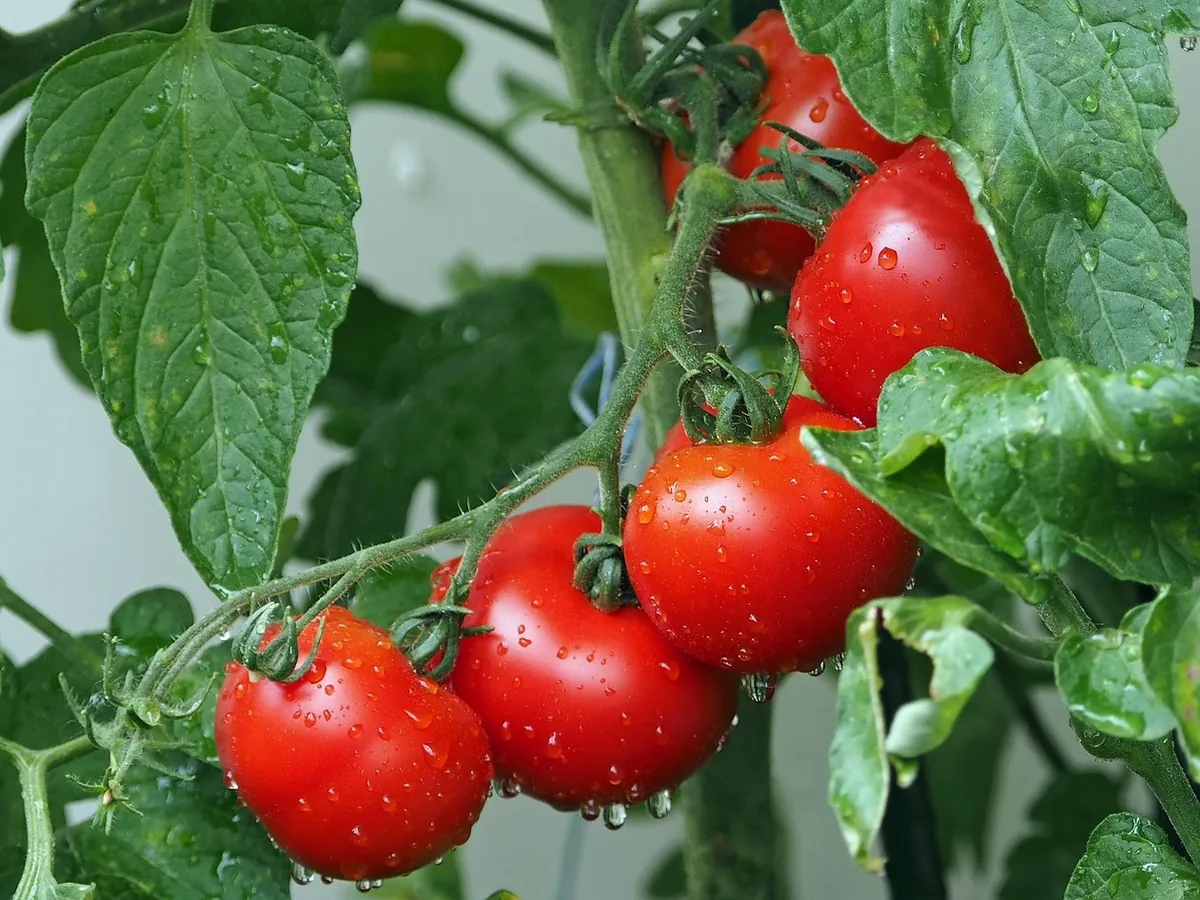
Tomato at a glance
| Botanical name | Solanum lycopersicum |
|---|---|
| Family | Solanaceae |
| Other names | love apple |
| Plant type | Vegetable; tender perennial grown as a summer annual |
| Size | 1 to 10 feet tall, 1 to 4 feet wide (bush types stay short; vining types need a cage or stake) |
| Light | Full sun (6 or more hours of direct sun) |
| Water | Keep soil evenly moist. Uneven watering is a main cause of cracked fruit and blossom-end rot. |
| Soil | Rich, well-drained soil with plenty of compost; slightly acid to neutral. |
| USDA hardiness zones | Grown as a summer annual in every zone. Plants cannot take frost. |
| USDA PLANTS symbol | SOLY2 |
When to plant tomato
Start seeds indoors 6 to 8 weeks before your average last frost. Plant outside about 2 weeks or more after that date, once nights stay warm.
Turn these into real dates for your area with the planting calendar.
How to grow tomato
- Start seeds indoors in a soilless mix and keep the lights close above the seedlings.
- Harden off the young plants for about a week before planting out.
- Plant in full sun, setting the stem deeper than it grew in the pot; the buried stem grows extra roots.
- Push in a cage or stake at planting time so you do not damage roots later.
- Water deeply at the base and add mulch to keep moisture even.
- Pick fruit when it is fully colored and gives slightly to a gentle squeeze.
Water and soil
Water: Keep soil evenly moist. Uneven watering is a main cause of cracked fruit and blossom-end rot.
Soil: Rich, well-drained soil with plenty of compost; slightly acid to neutral.
Light: Full sun (6 or more hours of direct sun).
Common problems
- Blossom-end rot
- A dark, sunken patch on the bottom of the fruit. It is linked to uneven watering, so water deeply and mulch.
- Cracked fruit
- Heavy rain or watering after a dry spell makes fruit swell fast and split. Even moisture helps.
- Leaf spots on lower leaves
- Fungal leaf spots often start low on the plant. Water the soil, not the leaves, and remove badly spotted leaves.
- Tomato hornworms
- Large green caterpillars that strip leaves. Pick them off by hand when you see them.
Is tomato safe for cats and dogs?
Toxic
Toxic
The ASPCA lists Tomato Plant (Lycopersicon spp) as toxic to cats and toxic to dogs. Signs it lists include: hypersalivation, poor appetite, severe gastrointestinal upset, depression, weakness, dilated pupils, slow heart rate; ripe fruit is non-toxic. ASPCA entry.
NC State Extension rates its poison severity for people and animals as medium.
If a pet chews a plant and you are worried, call your vet or the ASPCA Animal Poison Control Center (888-426-4435; a fee may apply). For people, call Poison Help at 1-800-222-1222. In an emergency, call 911.
Can you eat tomato?
The ripe fruit is edible raw or cooked. The leaves and stems are not food.
Tomato questions
How often should I water tomato plants?
Water deeply so the soil stays evenly moist, usually once or twice a week in the ground and more often in pots during hot weather. A layer of mulch helps keep moisture steady.
When should I plant tomatoes outside?
Plant them outside about 2 weeks or more after your average last spring frost date, when nights stay warm. Tomatoes cannot handle frost.
Are tomato plants toxic to cats and dogs?
Yes. The ASPCA lists the tomato plant as toxic to cats and dogs; the green parts are the problem, while the ASPCA notes that ripe fruit is non-toxic. If your pet chews the plant, call your vet.
Why are my tomato flowers falling off?
Flowers often drop when days are very hot or nights are cool, or when the plant is short of water. Fruit usually sets again when the weather settles.
Sources
- NC State Extension Gardener Plant Toolbox: Solanum lycopersicum (size, light, soil, zones, poison rating)
- USDA PLANTS Database profile: Solanum lycopersicum L. (accepted name)
- ASPCA: Tomato Plant (pet toxicity)
- ASPCA Animal Poison Control: plants toxic and non-toxic to cats
- ASPCA Animal Poison Control: plants toxic and non-toxic to dogs
- Colorado State University Extension: Growing Annual Plants from Seed
- University of Illinois Extension: Starting Seeds Indoors
- Colorado State University Extension: Vegetable Planting Guide
Written in our own words from the sources above. See our editorial policy. Spotted a mistake? Tell us.