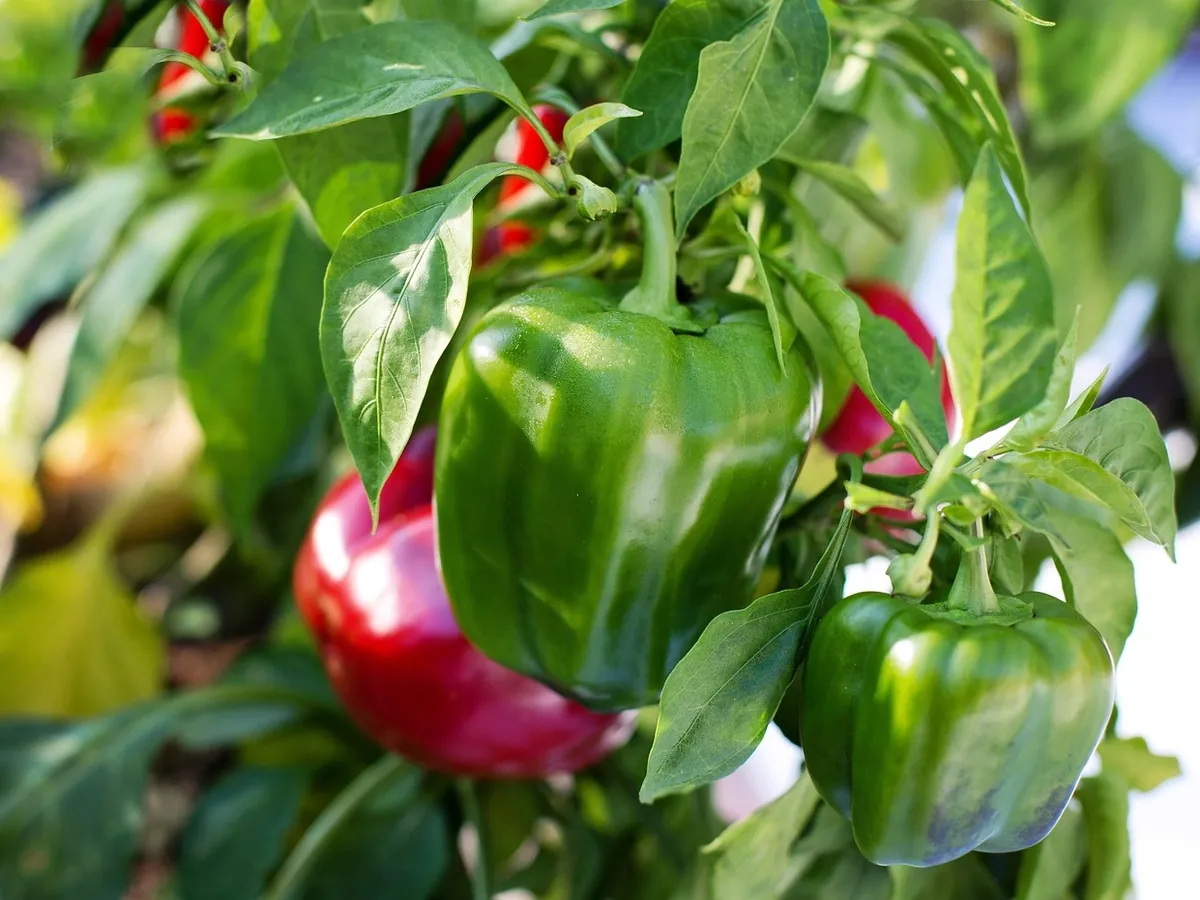
Pepper at a glance
| Botanical name | Capsicum annuum |
|---|---|
| Family | Solanaceae |
| Other names | bell pepper, chile pepper, sweet pepper |
| Plant type | Vegetable; tender perennial grown as a summer annual |
| Size | 1 to about 3.5 feet tall, 6 inches to 1 foot wide |
| Light | Full sun (6 or more hours of direct sun) |
| Water | Keep soil evenly moist; mulch helps prevent blossom-end rot. |
| Soil | Well-drained, fertile soil. |
| USDA hardiness zones | Grown as a summer annual in every zone. |
| USDA PLANTS symbol | CAAN4 |
When to plant pepper
Start seeds indoors 8 to 10 weeks before you plan to transplant. Plant out about 2 weeks after your last frost.
Turn these into real dates for your area with the planting calendar.
How to grow pepper
- Start seeds indoors in warm mix; pepper seed is slow to sprout in cool soil.
- Grow seedlings under bright lights.
- Harden off for about a week.
- Plant out in full sun once nights are warm.
- Mulch and water evenly; stake tall plants.
- Pick peppers green or wait for them to ripen to their full color.
Water and soil
Water: Keep soil evenly moist; mulch helps prevent blossom-end rot.
Soil: Well-drained, fertile soil.
Light: Full sun (6 or more hours of direct sun).
Common problems
- Flowers drop
- Very hot or cool nights can cause blossom drop; fruit sets again when temperatures settle.
- Blossom-end rot
- A sunken patch at the fruit tip linked to uneven watering.
Is pepper safe for cats and dogs?
Not listed
Not listed
Pepper is not on the ASPCA's toxic or non-toxic plant lists for cats and dogs.
The 'ornamental pepper' on the ASPCA toxic list is Solanum pseudocapsicum, a different plant from garden peppers.
If a pet chews a plant and you are worried, call your vet or the ASPCA Animal Poison Control Center (888-426-4435; a fee may apply). For people, call Poison Help at 1-800-222-1222. In an emergency, call 911.
Can you eat pepper?
The fruit is edible. Heat level varies a lot by variety.
Pepper questions
When should I start pepper seeds?
Start them indoors 8 to 10 weeks before you plan to transplant, and plant out about 2 weeks after your average last frost.
Are pepper plants toxic to dogs?
Garden peppers (Capsicum annuum) are not on the ASPCA's plant lists. The 'ornamental pepper' the ASPCA lists as toxic is a different plant (Solanum pseudocapsicum). Ask your vet if your pet eats the plant.
Why are my peppers not turning red?
Ripening takes time. Many peppers are picked green; leave them on the plant for several more weeks to color up.
Sources
- NC State Extension Gardener Plant Toolbox: Capsicum annuum (size, light, soil, zones, poison rating)
- USDA PLANTS Database profile: Capsicum annuum L. (accepted name)
- ASPCA Animal Poison Control: plants toxic and non-toxic to cats
- ASPCA Animal Poison Control: plants toxic and non-toxic to dogs
- University of Maryland Extension: Starting Vegetable Seeds Indoors
- Colorado State University Extension: Vegetable Planting Guide
Written in our own words from the sources above. See our editorial policy. Spotted a mistake? Tell us.