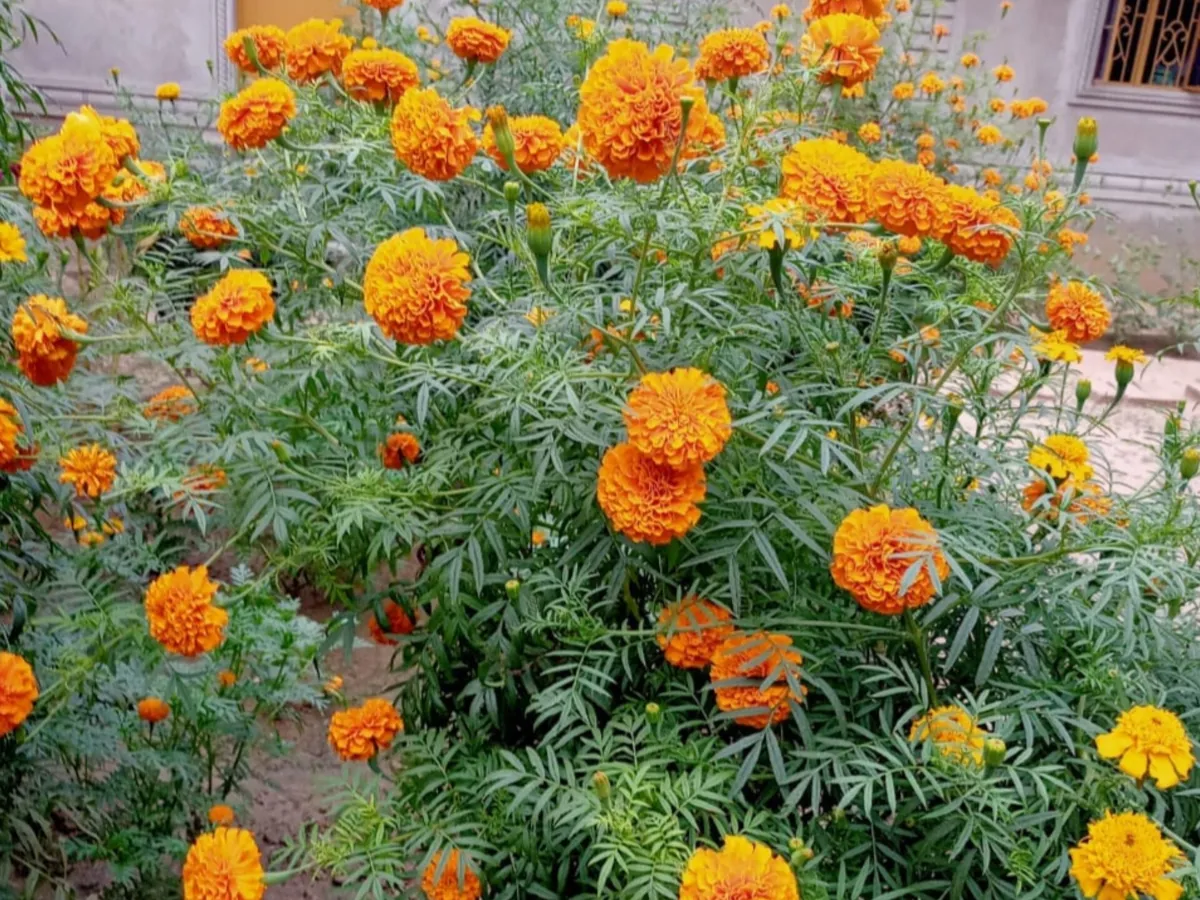
Marigold at a glance
| Botanical name | Tagetes erecta |
|---|---|
| Family | Asteraceae |
| Other names | African marigold, American marigold, Tagetes |
| Plant type | Flower; annual |
| Size | 1 to 4 feet tall, 1 to 2 feet wide (African types are the tallest) |
| Light | Full sun (6 or more hours of direct sun) |
| Water | Water when the soil dries; established plants tolerate short dry spells. |
| Soil | Well-drained soil of average fertility. |
| USDA hardiness zones | Grown as a summer annual in every zone. |
| USDA PLANTS symbol | TAER |
When to plant marigold
Start seeds indoors about 4 weeks before your last frost, or sow outdoors around the frost-free date.
Turn these into real dates for your area with the planting calendar.
How to grow marigold
- Sow seeds indoors about 4 weeks before the last frost, or directly outside.
- Plant out after frost danger in full sun.
- Space plants so air can move between them.
- Water at the base when the soil is dry.
- Remove faded flowers to keep new ones coming.
Water and soil
Water: Water when the soil dries; established plants tolerate short dry spells.
Soil: Well-drained soil of average fertility.
Light: Full sun (6 or more hours of direct sun).
Common problems
- Gray mold on flowers
- Happens in long wet spells. Remove spent blooms and give plants space.
- Spider mites
- Tiny mites cause speckled leaves in hot, dry weather. Spray leaves with water.
Is marigold safe for cats and dogs?
Not listed
Not listed
Marigold is not on the ASPCA's toxic or non-toxic plant lists for cats and dogs.
The 'garden marigold' the ASPCA lists as non-toxic is Calendula, a different plant from Tagetes marigolds.
NC State Extension rates its poison severity for people and animals as low.
If a pet chews a plant and you are worried, call your vet or the ASPCA Animal Poison Control Center (888-426-4435; a fee may apply). For people, call Poison Help at 1-800-222-1222. In an emergency, call 911.
Can you eat marigold?
Treat as not edible. NC State notes the sap can irritate skin in sunlight.
Marigold questions
Are marigolds toxic to cats and dogs?
Tagetes marigolds are not on the ASPCA's plant lists. The 'garden marigold' the ASPCA lists as non-toxic is a different plant (Calendula). NC State notes Tagetes sap can irritate skin. Ask your vet if a pet eats one.
Do marigolds come back every year?
Common marigolds are annuals. They may reseed, but plants from saved hybrid seed can look different.
How long do marigolds bloom?
From early summer until frost, especially if you remove faded flowers.
Sources
- NC State Extension Gardener Plant Toolbox: Tagetes erecta (size, light, soil, zones, poison rating)
- USDA PLANTS Database profile: Tagetes erecta L. (accepted name)
- ASPCA Animal Poison Control: plants toxic and non-toxic to cats
- ASPCA Animal Poison Control: plants toxic and non-toxic to dogs
- Colorado State University Extension: Growing Annual Plants from Seed
Written in our own words from the sources above. See our editorial policy. Spotted a mistake? Tell us.