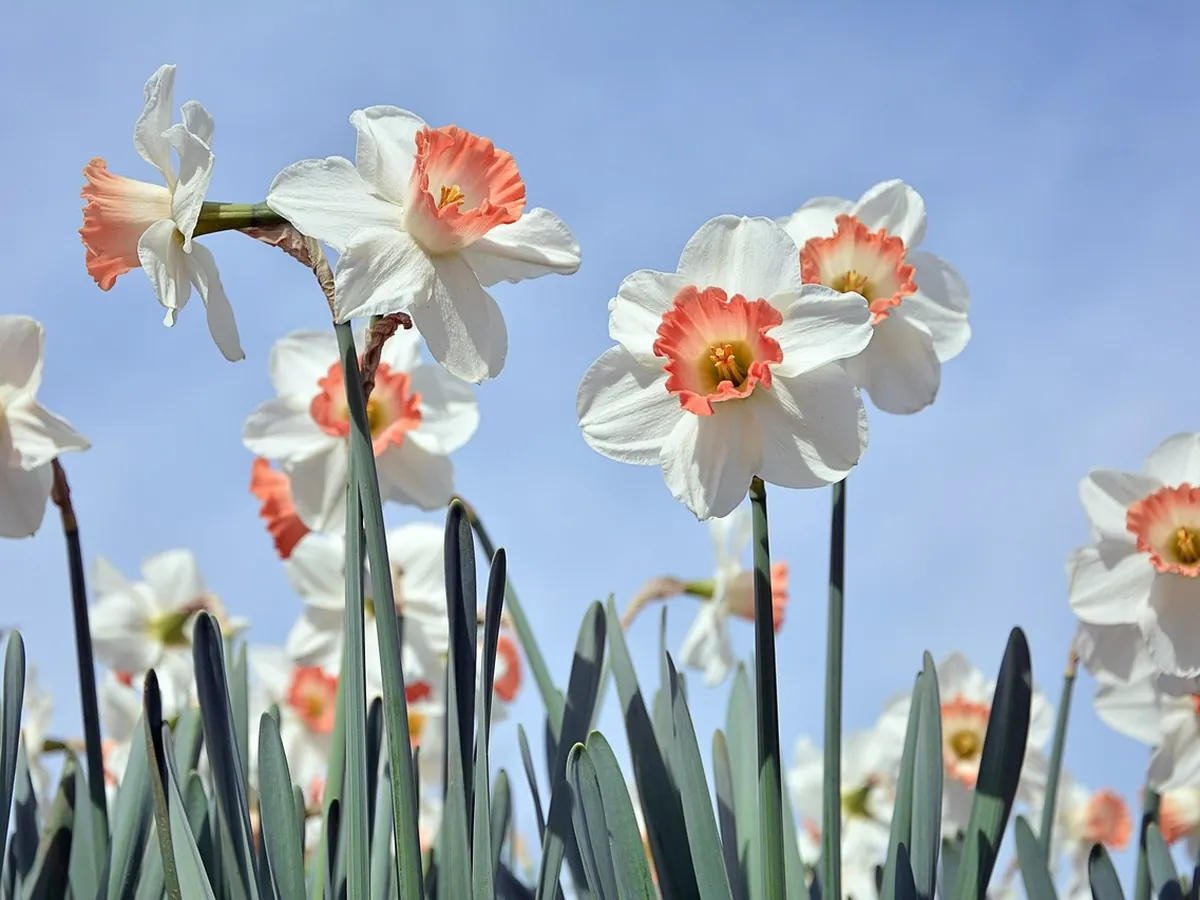
Daffodil at a glance
| Botanical name | Narcissus pseudonarcissus |
|---|---|
| Family | Amaryllidaceae |
| Other names | narcissus, jonquil |
| Plant type | Flower; spring-flowering bulb |
| Size | 1 to 1.5 feet tall, 9 to 12 inches wide |
| Light | Full sun (6 or more hours of direct sun); Part shade (2 to 6 hours of sun) |
| Water | Water after fall planting. Spring rain usually covers the rest. |
| Soil | Well-drained soil; slightly acid to neutral. |
| USDA hardiness zones | Hardy in zones 4 to 8. |
| USDA PLANTS symbol | NAPS |
When to plant daffodil
Plant bulbs in fall, a few weeks before the ground freezes.
How to grow daffodil
- Plant bulbs in fall, pointed end up, about three times as deep as the bulb is tall.
- Group them in clusters for a natural look.
- Water once after planting.
- After flowering, leave the leaves until they yellow; they feed the bulb.
- Dig and divide crowded clumps when flowering drops off.
Water and soil
Water: Water after fall planting. Spring rain usually covers the rest.
Soil: Well-drained soil; slightly acid to neutral.
Light: Full sun (6 or more hours of direct sun); Part shade (2 to 6 hours of sun).
Common problems
- Leaves but no flowers
- Clumps may be crowded, or leaves were cut too soon last year. Divide and let foliage ripen.
Is daffodil safe for cats and dogs?
Toxic
Toxic
The ASPCA lists Daffodil (Narcissus spp) as toxic to cats and toxic to dogs. Signs it lists include: vomiting, salivation, diarrhea; large ingestions cause convulsions, low blood pressure, tremors and cardiac arrhythmias. ASPCA entry.
NC State Extension rates its poison severity for people and animals as low.
If a pet chews a plant and you are worried, call your vet or the ASPCA Animal Poison Control Center (888-426-4435; a fee may apply). For people, call Poison Help at 1-800-222-1222. In an emergency, call 911.
Can you eat daffodil?
Not edible. All parts are toxic, especially the bulb.
Daffodil questions
Are daffodils toxic to dogs and cats?
Yes. The ASPCA lists daffodils as toxic to cats and dogs, and notes the bulbs are the most poisonous part. Signs include vomiting, drooling and diarrhea.
Do daffodils spread?
Yes, slowly. The bulbs multiply underground and clumps grow larger over the years.
When should I cut back daffodil leaves?
Wait until the leaves turn yellow, usually about six weeks after flowering. Green leaves feed next year's flowers.
Sources
- NC State Extension Gardener Plant Toolbox: Narcissus pseudonarcissus (size, light, soil, zones, poison rating)
- USDA PLANTS Database profile: Narcissus pseudonarcissus L. (accepted name)
- ASPCA: Daffodil (pet toxicity)
- ASPCA Animal Poison Control: plants toxic and non-toxic to cats
- ASPCA Animal Poison Control: plants toxic and non-toxic to dogs
Written in our own words from the sources above. See our editorial policy. Spotted a mistake? Tell us.