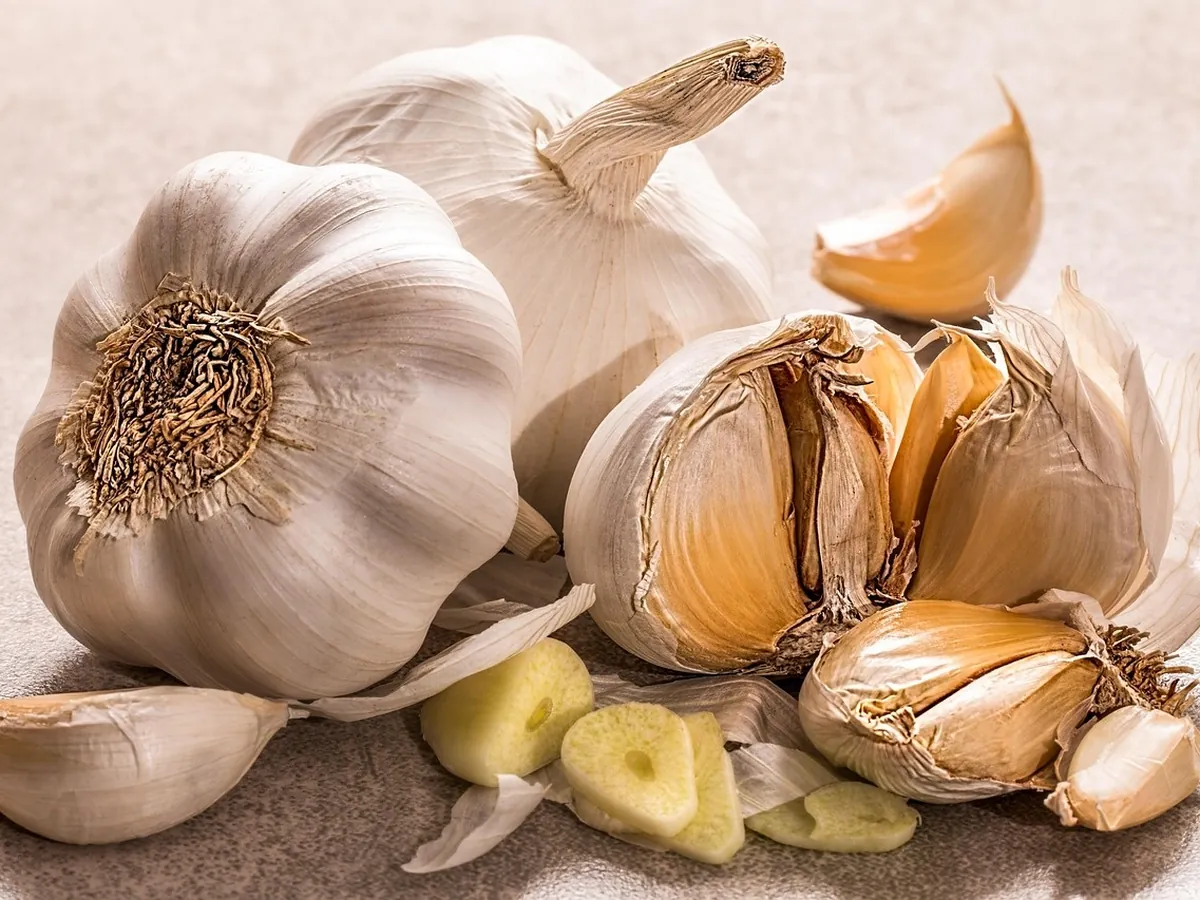
Garlic at a glance
| Botanical name | Allium sativum |
|---|---|
| Family | Amaryllidaceae |
| Other names | hardneck garlic, softneck garlic |
| Plant type | Vegetable; bulb grown as an annual |
| Size | 1 to 1.5 feet tall |
| Light | Full sun (6 or more hours of direct sun) |
| Water | Water in spring while bulbs grow; stop a couple of weeks before harvest. |
| Soil | Loose, well-drained soil with compost. |
| USDA hardiness zones | Grown in zones 4 to 9. Hardneck types suit cold winters; softneck types suit milder areas. |
| USDA PLANTS symbol | ALSA2 |
When to plant garlic
Plant cloves in fall, a few weeks before the ground freezes.
How to grow garlic
- Buy garlic for planting from a garden source; store garlic may be treated or poorly suited to your area.
- Split bulbs into cloves just before planting.
- Plant cloves pointed end up, about 2 inches deep.
- Mulch with straw for winter.
- Cut off curly flower stalks (scapes) on hardneck types in early summer.
- Harvest when several lower leaves have turned brown, then dry them for a few weeks in a dry, airy place.
Water and soil
Water: Water in spring while bulbs grow; stop a couple of weeks before harvest.
Soil: Loose, well-drained soil with compost.
Light: Full sun (6 or more hours of direct sun).
Common problems
- Small bulbs
- Late planting, weeds or dry spring soil. Plant on time and keep weeds down.
- Bulbs split open
- Left in the ground too long. Harvest when lower leaves brown.
Is garlic safe for cats and dogs?
Toxic
Toxic
The ASPCA lists Garlic (Allium sativum) as toxic to cats and toxic to dogs. Signs it lists include: vomiting, breakdown of red blood cells (hemolytic anemia, Heinz body anemia), blood in urine, weakness, high heart rate, panting. ASPCA entry.
NC State Extension rates its poison severity for people and animals as low.
If a pet chews a plant and you are worried, call your vet or the ASPCA Animal Poison Control Center (888-426-4435; a fee may apply). For people, call Poison Help at 1-800-222-1222. In an emergency, call 911.
Can you eat garlic?
Bulbs, young leaves, scapes and flowers are edible.
Garlic questions
When should I plant garlic?
In fall, a few weeks before the ground freezes. It grows roots before winter and bulbs up the next summer.
Is garlic toxic to dogs and cats?
Yes. The ASPCA lists garlic as toxic to cats and dogs; it can damage red blood cells. Keep it away from pets.
How do I know when garlic is ready?
When several of the lower leaves have turned brown while the top leaves are still green, usually in early to midsummer.
Sources
- NC State Extension Gardener Plant Toolbox: Allium sativum (size, light, soil, zones, poison rating)
- USDA PLANTS Database profile: Allium sativum L. (accepted name)
- ASPCA: Garlic (pet toxicity)
- ASPCA Animal Poison Control: plants toxic and non-toxic to cats
- ASPCA Animal Poison Control: plants toxic and non-toxic to dogs
Written in our own words from the sources above. See our editorial policy. Spotted a mistake? Tell us.