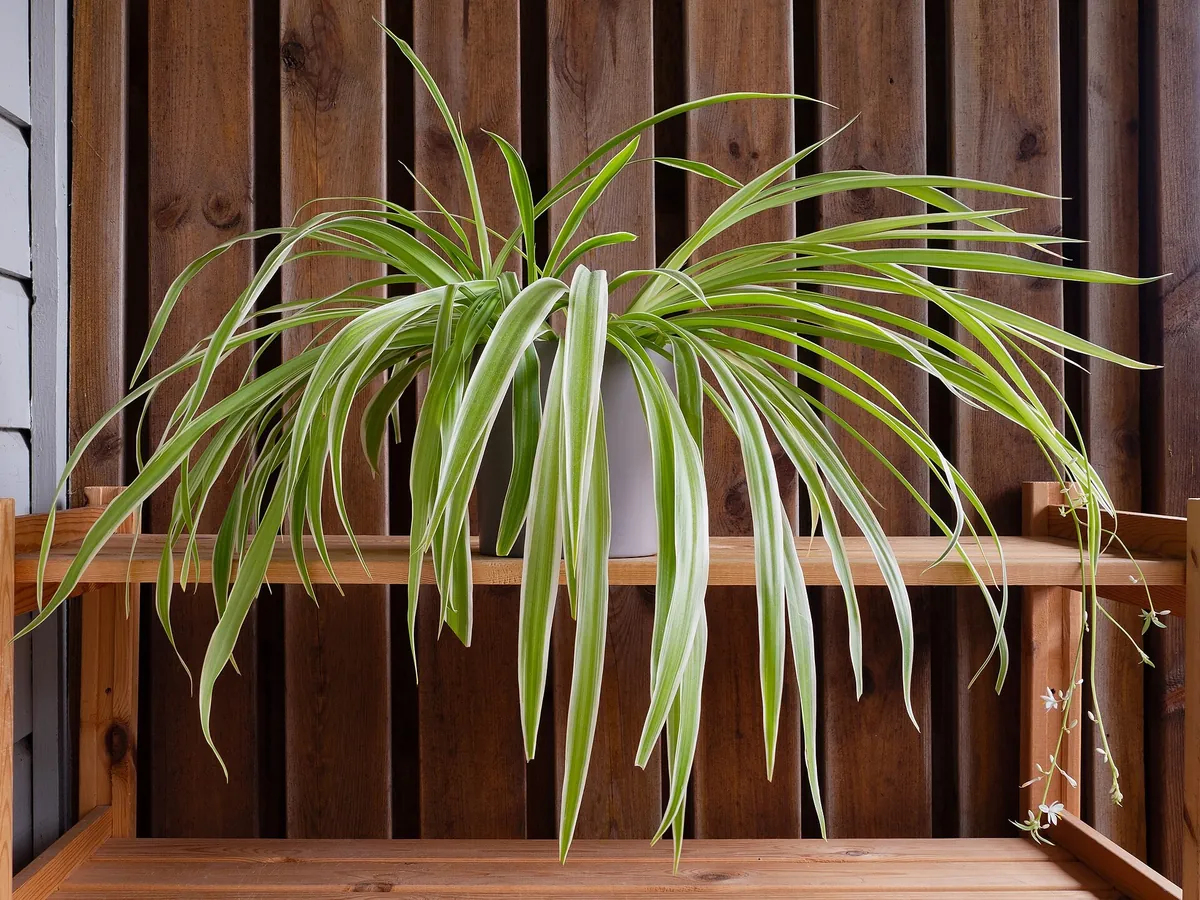
Spider Plant at a glance
| Botanical name | Chlorophytum comosum |
|---|---|
| Family | Asparagaceae |
| Other names | airplane plant, ribbon plant |
| Plant type | Houseplant; evergreen perennial (houseplant) |
| Size | 1 to 1.5 feet tall, 1 to 2 feet wide |
| Light | Part shade (2 to 6 hours of sun); Shade (under 2 hours of direct sun) |
| Water | Water when the top inch of soil is dry. |
| Soil | Well-drained indoor potting mix. |
| USDA hardiness zones | Outdoors in zones 9 to 11; elsewhere a houseplant or summer container plant. |
| USDA PLANTS symbol | CHCO28 |
When to plant spider plant
Repot or root plantlets in spring and summer.
How to grow spider plant
- Place in bright to medium indirect light.
- Water when the top inch of soil is dry.
- Pot up the baby plantlets in moist mix to make new plants.
- Feed lightly in spring and summer.
- Repot when roots crowd the pot.
Water and soil
Water: Water when the top inch of soil is dry.
Soil: Well-drained indoor potting mix.
Light: Part shade (2 to 6 hours of sun); Shade (under 2 hours of direct sun).
Common problems
- Brown leaf tips
- Common from dry air, salts or fluoride in water. Trim tips and flush the soil now and then.
- Pale leaves
- Too much direct sun. Move to softer light.
Is spider plant safe for cats and dogs?
Non-toxic
Non-toxic
The ASPCA lists Spider Plant (Chlorophytum comosum) as non-toxic to cats and non-toxic to dogs. ASPCA entry.
If a pet chews a plant and you are worried, call your vet or the ASPCA Animal Poison Control Center (888-426-4435; a fee may apply). For people, call Poison Help at 1-800-222-1222. In an emergency, call 911.
Can you eat spider plant?
Not grown as food.
Spider Plant questions
Is spider plant safe for cats?
The ASPCA lists spider plant as non-toxic to cats and dogs. Some cats still like to chew the leaves, so place it out of reach if that is a problem.
How do you propagate a spider plant?
Set a plantlet on moist potting mix while it is still attached, or snip it off and root it in water or mix.
Why are my spider plant tips brown?
Dry air, salt build-up and minerals in tap water can brown the tips. Trim them and flush the soil occasionally.
Sources
- NC State Extension Gardener Plant Toolbox: Chlorophytum comosum (size, light, soil, zones, poison rating)
- USDA PLANTS Database profile: Chlorophytum comosum (Thunb.) Jacq. (accepted name)
- ASPCA: Spider Plant (pet toxicity)
- ASPCA Animal Poison Control: plants toxic and non-toxic to cats
- ASPCA Animal Poison Control: plants toxic and non-toxic to dogs
Written in our own words from the sources above. See our editorial policy. Spotted a mistake? Tell us.