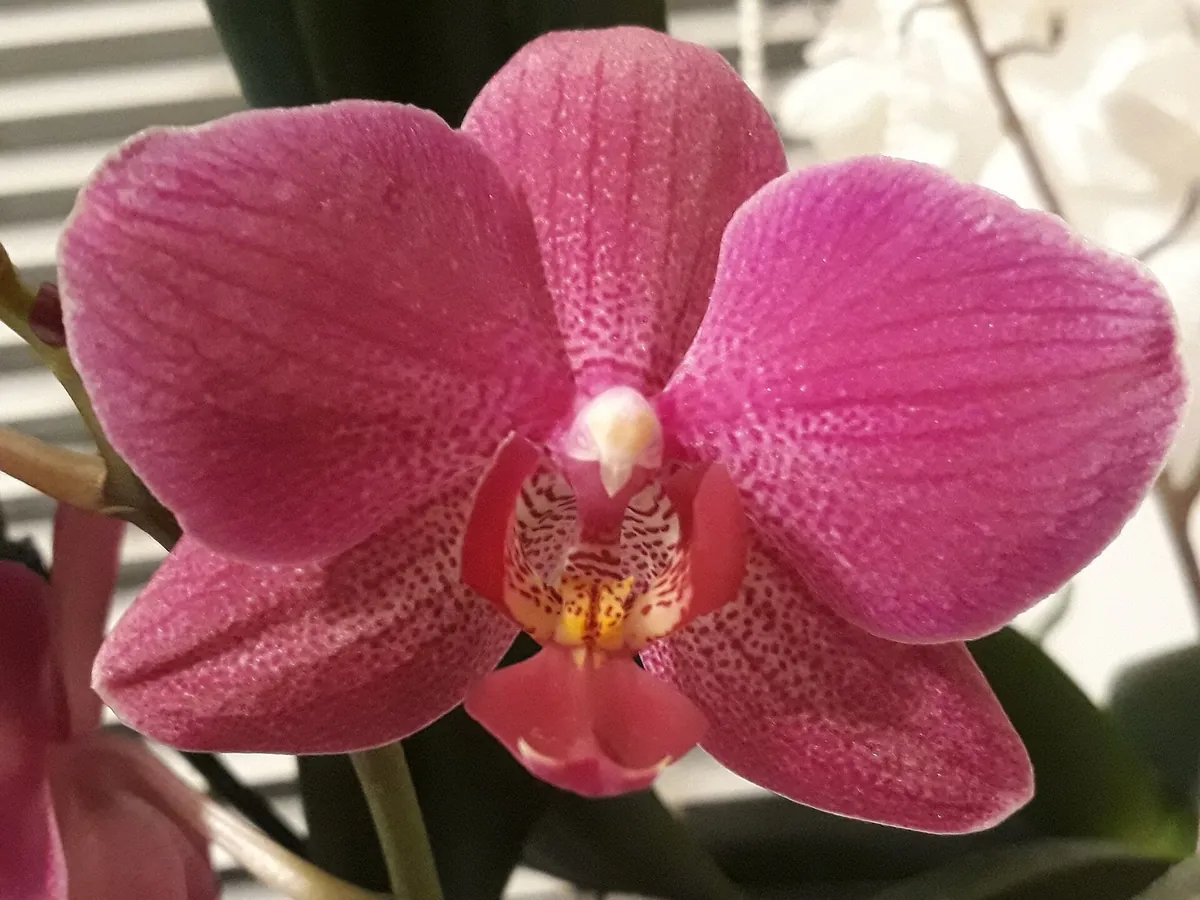
Moth Orchid at a glance
| Botanical name | Phalaenopsis hybrids |
|---|---|
| Family | Orchidaceae |
| Other names | Phalaenopsis, moth orchid |
| Plant type | Houseplant; epiphytic perennial (houseplant) |
| Size | 1.5 to 2 feet tall in flower |
| Light | Part shade (2 to 6 hours of sun); Shade (under 2 hours of direct sun) |
| Water | Water when the potting bark is nearly dry, about once a week for many homes. Never leave the pot standing in water. |
| Soil | Orchid bark or sphagnum moss, not regular potting soil. |
| USDA hardiness zones | A houseplant in nearly all of the US. |
| USDA PLANTS symbol | PHALA10 |
When to plant moth orchid
Repot after flowering, every year or two, when the bark breaks down.
How to grow moth orchid
- Place in bright, indirect light, such as an east window.
- Water thoroughly at the sink, then let it drain completely.
- Feed lightly with orchid fertilizer while it grows new leaves.
- After flowers fade, cut the spike back or leave it to rebloom.
- A few weeks of slightly cooler nights in fall can help start a new flower spike.
Water and soil
Water: Water when the potting bark is nearly dry, about once a week for many homes. Never leave the pot standing in water.
Soil: Orchid bark or sphagnum moss, not regular potting soil.
Light: Part shade (2 to 6 hours of sun); Shade (under 2 hours of direct sun).
Common problems
- Wrinkled, limp leaves
- Often root damage from too much or too little water. Check that roots are firm and green or silver.
- No new flowers
- Usually low light. Move to a brighter spot.
Is moth orchid safe for cats and dogs?
Non-toxic
Non-toxic
The ASPCA lists Phalaenopsis Orchid (Phalaenopsis sp.) as non-toxic to cats and non-toxic to dogs. ASPCA entry.
If a pet chews a plant and you are worried, call your vet or the ASPCA Animal Poison Control Center (888-426-4435; a fee may apply). For people, call Poison Help at 1-800-222-1222. In an emergency, call 911.
Can you eat moth orchid?
Not grown as food.
Moth Orchid questions
Are orchids toxic to cats?
The ASPCA lists Phalaenopsis orchids as non-toxic to cats and dogs.
How do I get my orchid to bloom again?
Give bright, indirect light, feed lightly while it grows, and allow slightly cooler nights in fall. A new spike can take several months.
Should I water my orchid with ice cubes?
A thorough watering at the sink, then full drainage, wets the whole root system more evenly. Water when the bark is nearly dry.
Sources
- NC State Extension Gardener Plant Toolbox: Moth Orchid (size, light, soil, zones, poison rating)
- USDA PLANTS Database profile: Phalaenopsis Blume (accepted name)
- ASPCA: Phalaenopsis Orchid (pet toxicity)
- ASPCA Animal Poison Control: plants toxic and non-toxic to cats
- ASPCA Animal Poison Control: plants toxic and non-toxic to dogs
Written in our own words from the sources above. See our editorial policy. Spotted a mistake? Tell us.