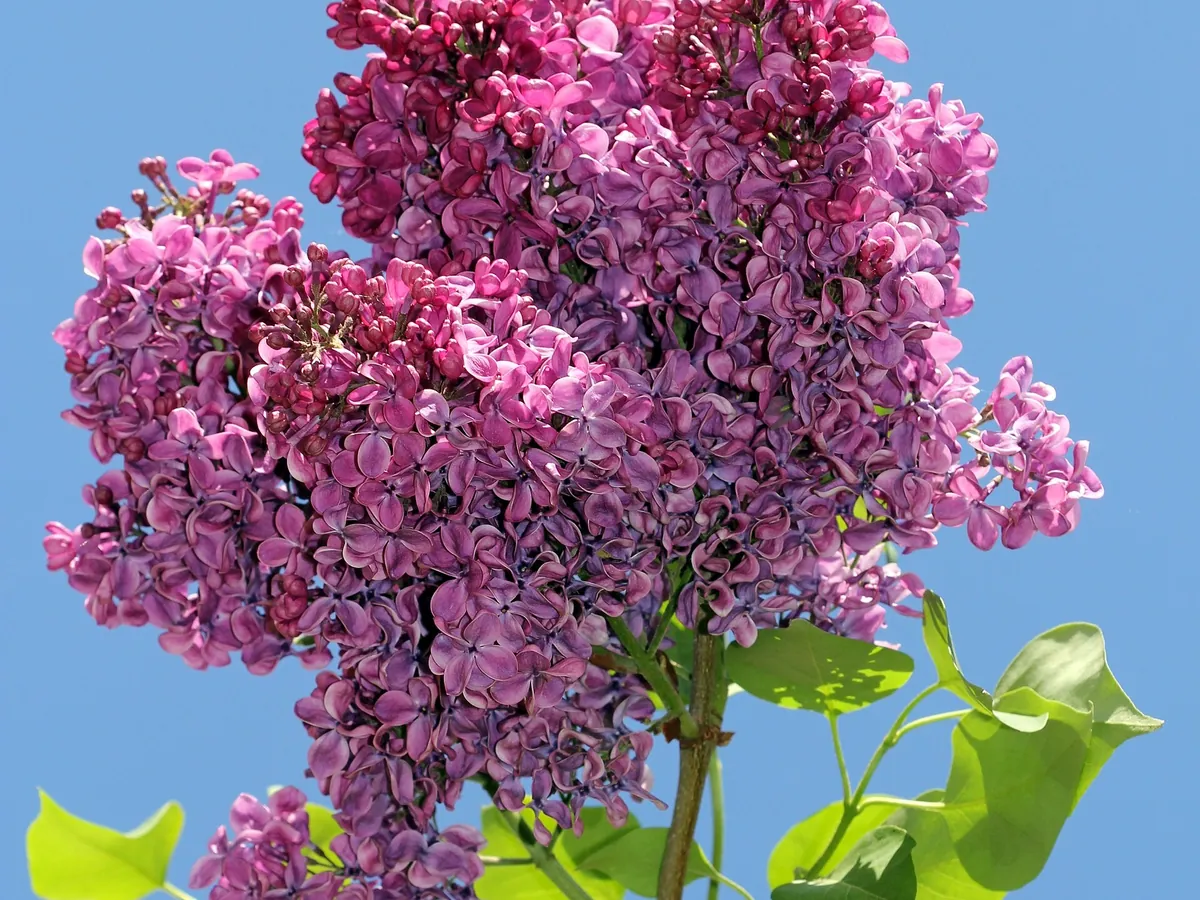
Lilac at a glance
| Botanical name | Syringa vulgaris |
|---|---|
| Family | Oleaceae |
| Other names | common lilac |
| Plant type | Shrub; deciduous shrub |
| Size | 8 to 16 feet tall, 6 to 12 feet wide |
| Light | Full sun (6 or more hours of direct sun); Part shade (2 to 6 hours of sun) |
| Water | Water young shrubs in dry spells; established lilacs are fairly drought tolerant. |
| Soil | Well-drained soil; neutral to slightly alkaline. |
| USDA hardiness zones | Hardy in zones 3 to 7. It needs cold winters to bloom. |
| USDA PLANTS symbol | SYVU |
When to plant lilac
Plant in spring or fall.
Turn these into real dates for your area with the planting calendar.
How to grow lilac
- Plant in full sun with good air flow.
- Water well the first two summers.
- Prune right after flowering; next year's buds form in summer.
- Remove a few of the oldest stems each year on mature shrubs.
- Remove suckers at the base if you want a tidy shape.
Water and soil
Water: Water young shrubs in dry spells; established lilacs are fairly drought tolerant.
Soil: Well-drained soil; neutral to slightly alkaline.
Light: Full sun (6 or more hours of direct sun); Part shade (2 to 6 hours of sun).
Common problems
- Powdery mildew
- White powder on leaves in late summer; mostly cosmetic. Air flow helps.
- Few flowers
- Too much shade or pruning at the wrong time.
Is lilac safe for cats and dogs?
Not listed
Not listed
Lilac is not on the ASPCA's toxic or non-toxic plant lists for cats and dogs.
The 'Persian lilac' on the ASPCA toxic list is Melia azedarach, a different tree.
If a pet chews a plant and you are worried, call your vet or the ASPCA Animal Poison Control Center (888-426-4435; a fee may apply). For people, call Poison Help at 1-800-222-1222. In an emergency, call 911.
Can you eat lilac?
NC State notes the flowers can be eaten raw or cooked.
Lilac questions
When should I prune lilacs?
Right after they finish flowering in spring. Pruning later removes next year's flower buds.
Are lilacs toxic to dogs?
Common lilac (Syringa vulgaris) is not on the ASPCA's plant lists. The 'Persian lilac' the ASPCA lists as toxic is a different tree (Melia azedarach). Ask your vet if your pet eats the plant.
Why won't my lilac bloom?
The usual causes are too much shade, late pruning, or a young plant. Lilacs also need cold winters.
Sources
- NC State Extension Gardener Plant Toolbox: Syringa vulgaris (size, light, soil, zones, poison rating)
- USDA PLANTS Database profile: Syringa vulgaris L. (accepted name)
- ASPCA Animal Poison Control: plants toxic and non-toxic to cats
- ASPCA Animal Poison Control: plants toxic and non-toxic to dogs
Written in our own words from the sources above. See our editorial policy. Spotted a mistake? Tell us.